
Focus Keyphrase: downloaded memories unsettling patient diagnosis
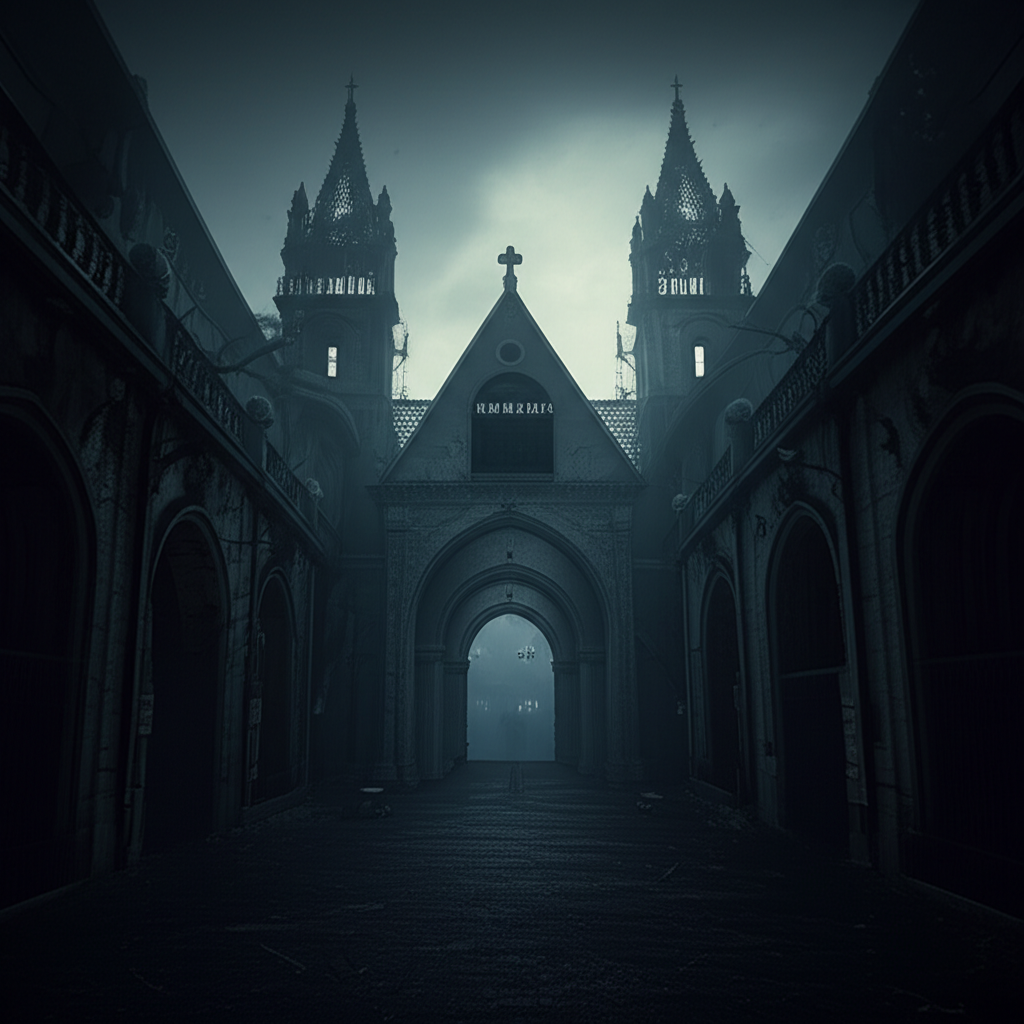
The sterile white walls of the Lumina Institute pressed in. Dr. Aris Thorngraft adjusted his spectacles, the hum of the environmental control system a low thrum against his nerves. His newest patient, designation “Subject 734,” lay still on the examination couch. This wasn’t just another case of amnesia. Around them, the scent of antiseptic warred with something else, something faintly metallic, like old blood. Subject 734’s eyes, a startlingly vibrant hazel, flickered open, yet showed no recognition. Thorngraft leaned closer. “Can you hear me, 734?” he asked softly. The room held its breath. This was where the unsettling narrative of a downloaded memories unsettling patient diagnosis truly began.
The Unveiling of Theron’s Echo
Theron Blythe, as the institute had tentatively labelled him, stirred. A slow, agonizing breath escaped his lips. He didn’t know his name, didn’t know how he arrived here. All he possessed was a fragmented, disjointed kaleidoscope of other people’s lives. He could recall the salty spray of an ocean he’d never seen, the warmth of a lover’s hand he’d never held, the sting of a violin bow across strings that never existed for him. These phantom sensations, so vivid, so real, were Theron’s torment.

They called it a cognitive implant scenario, a theoretical fabrication of the Lumina Institute’s more ambitious minds. Yet as Thorngraft cataloged Theron’s delirious pronouncements, the line between theory and chilling reality blurred. Theron spoke of a childhood beneath towering redwood trees, of a mother’s lullaby sung in a language Thorngraft couldn’t place. He described the frantic pulse of a chase through dimly lit alleys, the icy grip of death’s tendrils closing in. These were not mere fantasies; they were too detailed, too visceral to be mere imagination.
Consequently, Thorngraft felt a prickle of unease. This wasn’t simple psychosis. This felt deliberate, orchestrated. He initiated a series of neurological scans, the faint whirring of the machines amplifying the growing dread in the silent room. The readings were anomalous, inconsistent. There were traces of foreign neural pathways, phantom connections that defied biological explanation. This raised the terrifying question: was Theron a victim of a stolen past?
Whispers of a False History
“She… she had eyes like a stormy sea,” Theron rasped, his voice raw, alien. He reached out, his fingers brushing against Thorngraft’s lab coat as if searching for a familiar touch. “Her name was Lyra. She… she loved starlight.” Thorngraft remained impassive, but inside, a storm brewed. Lyra was not a name among the few fragmented records they possessed associated with Subject 734’s admission. This phantom woman, vivid in Theron’s mind, represented a profound disconnect.
The institute’s ethos was progress through understanding. But understanding Theron felt like navigating a labyrinth constructed from borrowed lives. Each memory he recounted, each emotion he projected, felt borrowed, incongruous. He’d possess a sudden fluency in a language he’d never learned, then lapse into a profound, childlike confusion. He demonstrated an intimate knowledge of advanced astrophysics, only to struggle with the simple act of buttoning his shirt. This patchwork existence pointed towards a carefully curated, yet deeply flawed, narrative.
Furthermore, Thorngraft consulted with Dr. Elara Vance, the institute’s leading neuroscientist. Vance, a woman as sharp as the scalpels she sometimes wielded, reviewed the scans with a frown. “These waveform anomalies, Aris,” she said, tapping a brightly colored graph, “they suggest extraneous data integration. It’s like… someone overlaid a new operating system onto a pre-existing one.” Her words hung in the air, ominous. Was Theron’s entire being a fabrication, a profound false history?
The Chains of Institutionalization
Theron’s days blurred into a monotonous cycle of tests, examinations, and quiet despair. The Lumina Institute, with its pristine halls and watchful personnel, offered a gilded cage. He was a specimen, an anomaly to be dissected, understood, and perhaps, cured. But cure what? His original self, or the composite being the implant had fostered? The existential weight of his situation was crushing.
The staff, while professional, maintained a detached curiosity, observing his every twitch, his every whispered word. They spoke of him in hushed tones, debating the ethics of his confinement, the implications of his condition. He overheard snippets – “experimental procedure,” “unforeseen consequences,” “ethical review.” These phrases, devoid of empathy, reinforced his sense of isolation. The institutionalization was not for his comfort but for observation.

Meanwhile, Theron experienced flashes of rebellion, surges of a defiant spirit that felt both foreign and deeply ingrained. He would clench his fists, his jaw tightening with an anger he didn’t understand but felt intensely. He yearned for an escape, not just from the institute, but from the prison of his own mind. He wanted to find the origin of these stolen moments, the architects of his borrowed reality.
Unraveling the Cognitive Implant
“There were lights,” Theron murmured one evening, his eyes unfocused, staring at the ceiling. “So many lights. Like a city… but not. And a voice. Cold. Clinical. Saying… ‘Initiating download complete. Memory suite 7B operational.’” The words, spoken with chilling clarity, sent a shiver down Thorngraft’s spine. This was the closest they had come to tangible evidence of the cognitive implant.
The implications were staggering. Someone had intentionally altered Theron’s mind, overwriting his genuine experiences with a manufactured past. But why? To what end? Was he a test subject for psychological warfare? A guinea pig in an clandestine experiment? The Lumina Institute, despite its public facade, harbored secrets. Its funding often came from shadowy conglomerates with questionable ethical standards.
The external link here would be to the history of memory manipulation. You can explore the fascinating and often disturbing history of memory manipulation here. The concept of implanting false memories, once relegated to science fiction, now seemed terrifyingly plausible. Thorngraft felt a growing responsibility, not just as a doctor, but as a protector. He had to uncover the truth before the downloaded past consumed Theron entirely.
The Shadow of Stolen Echoes
The narrative shifted subtly. Theron began to exhibit behaviors that were inconsistent even with the downloaded memories. He’d recoil from photographs that resembled the phantom people he claimed to know, his body tensing with an unidentifiable dread. He spoke of an overwhelming sense of being watched, of invisible eyes scrutinizing his every move. This paranoia, while understandable given his condition, had a specific, chilling edge to it.
One night, Theron became agitated, clawing at his own temples. “It’s too loud!” he cried. “The static! It’s erasing me!” Thorngraft rushed to his room, finding him thrashing on his bed, sweat beading on his forehead. The hum of the institute’s systems seemed to intensify, a pulsating pressure in Theron’s skull. Was the implant malfunctioning? Or was something fighting against it?
This internal conflict, this battle within his own consciousness, was the true horror. Theron was not merely a passive recipient of stolen echoes; he was a battleground. The stolen past fought against the nascent uploaded narrative, creating an unbearable dissonance. The Psychological Horror was no longer an external threat; it was a fundamental aspect of Theron’s existence. Thorngraft felt a growing certainty that the Lumina Institute held the key, but they intended to keep it locked away.
The Core of the Cognitive Implant
Dr. Vance discovered a latent energy signature within Theron’s cerebral cortex. It was faint, pulsing, and inexplicable. “It’s like… residual data,” she explained, her voice hushed. “Leftover code from the initial download process. It’s… trying to connect to something.” The information Theron possessed was not static; it was dynamic, alive, and potentially, communicable.

This meant the cognitive implant was more than just a storage device; it was a conduit. It could receive, process, and perhaps, even transmit. The thought sent a fresh wave of fear through Thorngraft. If Theron’s memories could be downloaded, could they be uploaded to others? Was he a precursor to something far more sinister, a weaponized consciousness? The institute’s motives began to seem less about healing and more about control.
He began discreetly investigating the institute’s private research logs, bypassing firewalls and encrypted files. He found fragmented reports detailing projects involving synthetic memory acquisition and personality mapping. The names were cold, clinical: Project Chimera, Echo Protocol, Psyrecon Thesis. They spoke of integrating disparate neural patterns to create bespoke entities. Theron was not an accident; he was a prototype. His unique predicament was a horrific manifestation of the Lumina Institute’s pursuit of a false history.
Confrontation at Lumina
Thorngraft confronted the institute’s director, a stern, unyielding man named Silas Thorne. Thorne, however, deflected every accusation with practiced ease. “Subject 734 is a testament to our groundbreaking work, Doctor,” Thorne stated, his smile thin and insincere. “A demonstration of our ability to reconstruct fragmented minds. His recovery requires controlled observation.”
But Thorngraft saw the fear flicker in Thorne’s eyes, the subtle tightening of his jaw. He knew Thorne was hiding something profound. During their tense exchange, Theron, from his room down the hall, convulsed, a guttural scream tearing from his throat. It was a sound of pure agony, a sound that echoed with the stolen pain of a thousand lives.
Suddenly, the lights in Thorne’s office flickered violently. The environmental control system whined, then shrieked like a wounded animal. The metallic tang in the air intensified, a sharp, biting odor. Thorne paled, his composure shattering. “What is happening?” he demanded, his voice edged with panic.
Thorngraft realized, with dawning horror, that Theron’s borrowed consciousness was not merely a passive echo. It was actively resisting. The implanted memories, alien and incompatible, were tearing him apart. And in his death throes, he was unleashing something chaotic, something untamed, directly into the institute’s very infrastructure. This Psychological Horror had found its breaking point.
The Lingering Static
Weeks later, Theron was gone. Not deceased, but… vanished. One morning, his room was empty. The security footage showed no signs of exit, no forced entry. He simply ceased to be within the Lumina Institute’s confines. The official report cited a “highly unusual spontaneous remission and subsequent disappearance.” The institute swiftly moved to contain the narrative, issuing a press release about their successful, albeit unconventional, treatment of severe dissociative amnesia.
However, the tremors of Theron’s existence lingered. Staff members reported phantom whispers in empty corridors, fleeting visions of hazel eyes in reflective surfaces. The metallic scent occasionally returned, a ghost of the downloaded memories. Some claimed to hear faint, discordant melodies, like a violin played out of tune. The implant, or whatever remnants of it remained, had left an indelible scar.
Dr. Aris Thorngraft, no longer employed by Lumina, now worked from a small, cluttered office in the city’s forgotten district. He continued his research, driven by the chilling question: where did Theron go? Had his borrowed past finally consumed him, or had he, in his final moments, found a way to shed the downloaded skins and reclaim something… almost like himself? Or perhaps, he had become something else entirely, a distributed consciousness, a ghost in the machine, forever haunting the digital and psychological landscapes. The stolen past had finally fractured, and no one knew what new, terrifying entity had emerged from the fragments, leaving behind only the residual static of a terrifyingly manufactured mind, a testament to the ultimate horror of a downloaded memories unsettling patient diagnosis.
Leave a Reply